
Struggling with shooting leg pain? Discover 5 proven sciatica pain relief strategies, from targeted stretches to ergonomic tips, to get back on your feet fast.
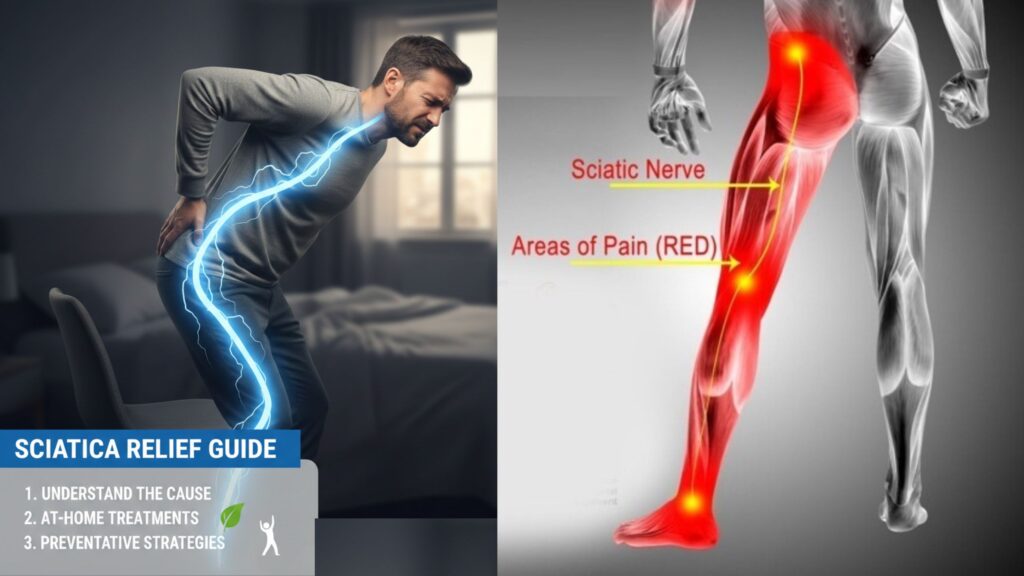
If you’re experiencing a sharp, electric-like shock traveling from your lower back down through your leg, you know that sciatica is more than just “a sore back.” It can be debilitating, making it hard to sit, stand, or even sleep.
The good news? While the pain feels intense, most cases of sciatica can be managed effectively at home. Here is a science-backed guide to finding relief and reclaiming your mobility.
1. Targeted Stretching and Mobility
When you’re in pain, your instinct might be to stay in bed. However, gentle movement is often the best medicine for a compressed nerve.
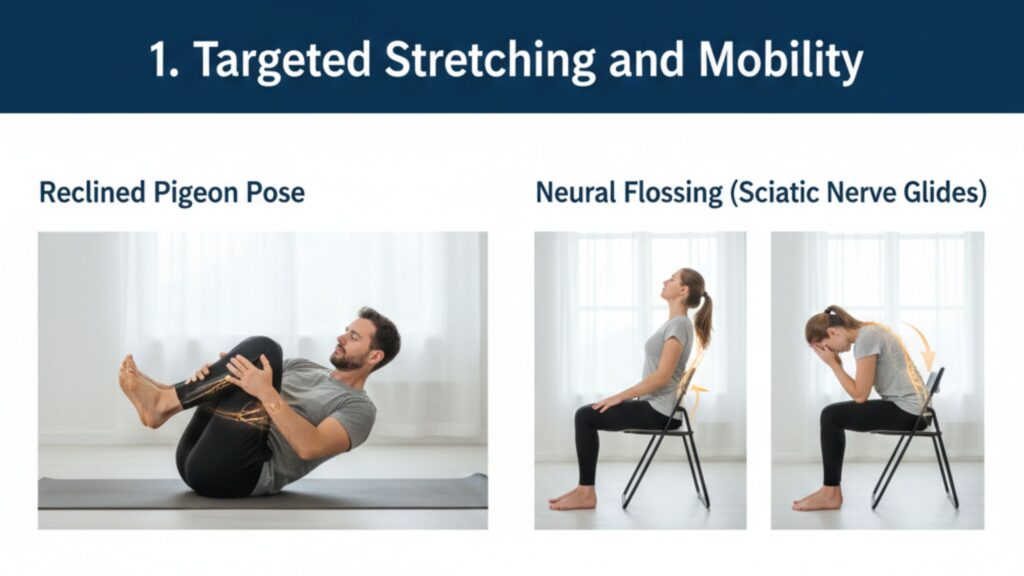
- The Reclined Pigeon Pose: This is a favorite for those whose sciatica is triggered by tight glutes. Lay on your back, cross your right ankle over your left knee, and gently pull your left thigh toward your chest.
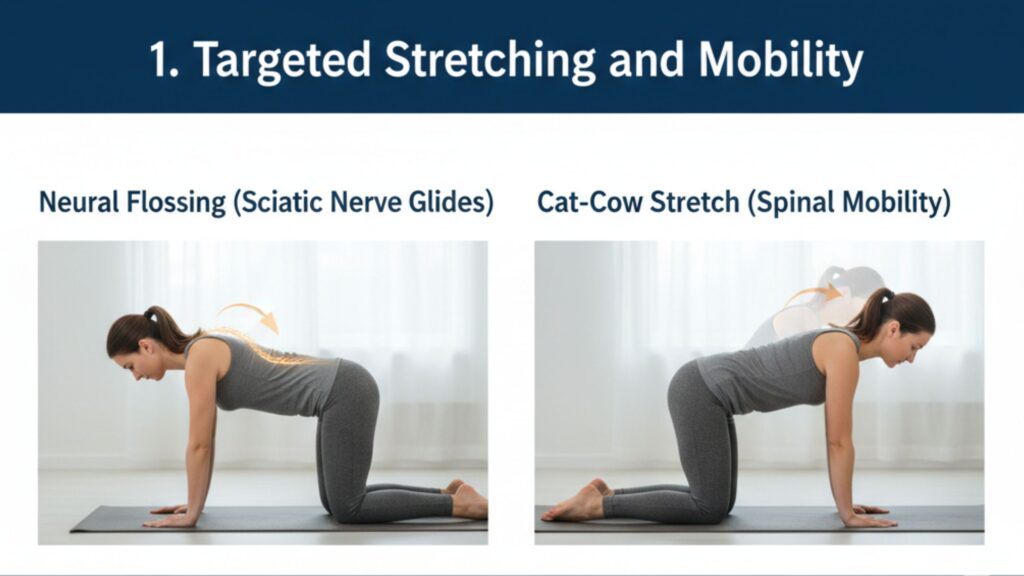
- Neural Flossing: Think of this as “sliding” the nerve through the surrounding tissue to reduce irritation. While sitting, slowly straighten your knee while looking up at the ceiling, then bend your knee while tucking your chin to your chest.
- Cat-Cow Stretch: This moves the spine through its full range of motion, helping to create space between the vertebrae.
2. Strategic Use of Heat and Ice
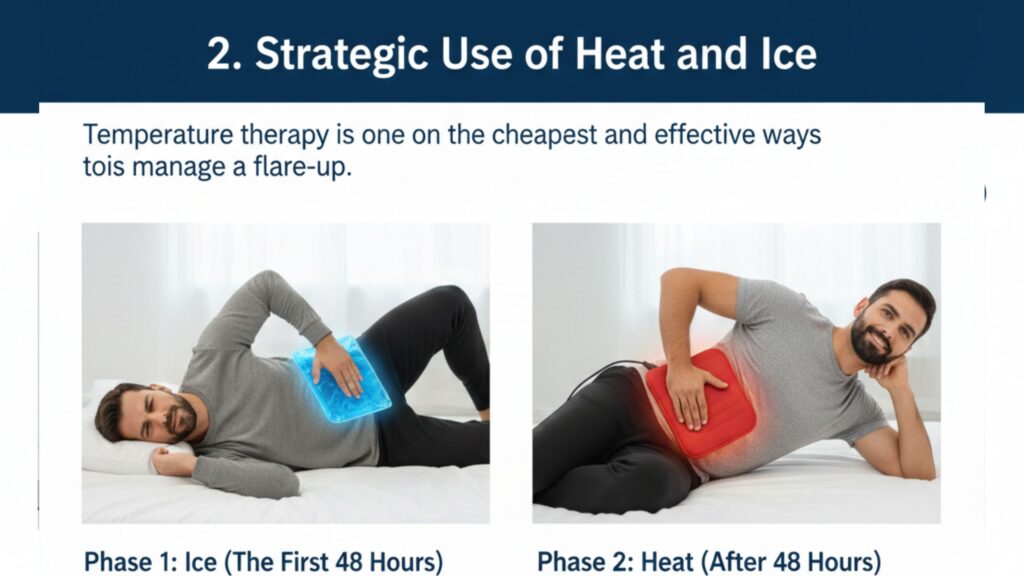
Temperature therapy is one of the cheapest and most effective ways to manage a flare-up.
- Phase 1: Ice (The First 48 Hours): Use an ice pack for 15 minutes every few hours. This constricts blood vessels and brings down the acute inflammation at the nerve root.
- Phase 2: Heat (After 48 Hours): Once the sharpest pain has subsided, switch to a heating pad. Heat increases blood flow to the area, which promotes healing and relaxes the muscle spasms that often accompany nerve pain.
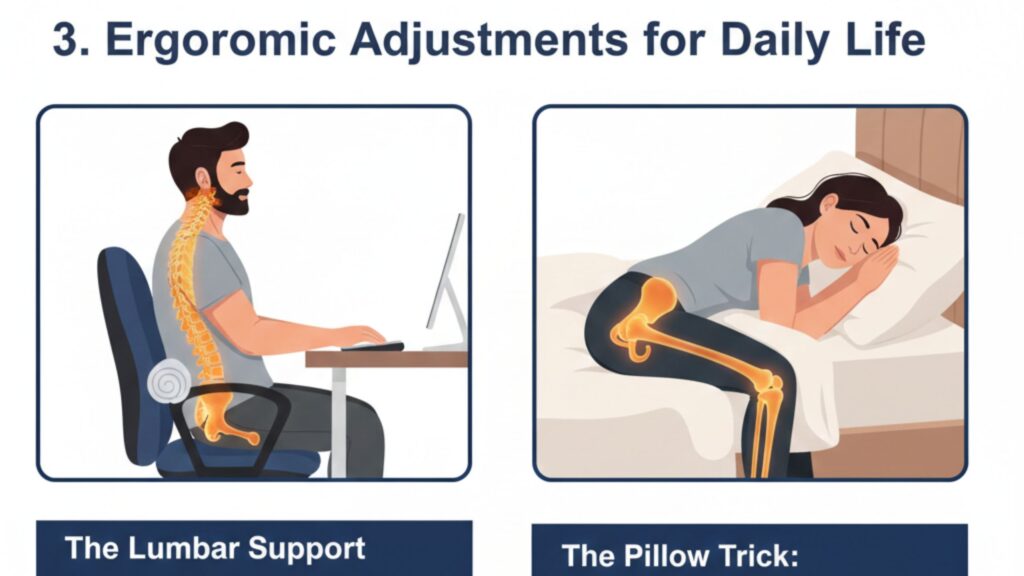
3. Ergonomic Adjustments for Daily Life
Many people “re-injure” themselves every time they sit down. Small changes to your environment can take the constant pressure off your lumbar spine.
- The Lumbar Support: If your chair doesn’t have a curve, roll up a small towel and place it at the small of your back. This maintains the natural “S-curve” of your spine.
- The Pillow Trick: * Side Sleepers: Place a firm pillow between your knees to keep your hips square.
- Back Sleepers: Place a pillow under your knees to flatten the lower back against the mattress.
4. Anti-Inflammatory Nutrition
Since sciatica is essentially an inflammatory condition, what you eat matters. Chronic inflammation in the body makes nerves more sensitive to pain.
- Magnesium-Rich Foods: Magnesium helps with muscle relaxation. Incorporate spinach, pumpkin seeds, and dark chocolate.
- Turmeric and Ginger: Both contain natural compounds that mimic the effects of mild over-the-counter anti-inflammatories.
- Hydration: Your spinal discs are mostly water. Staying hydrated ensures they remain plump and effective at cushioning your vertebrae.

5. Knowing When to Seek Professional Help
While home care works for many, sciatica can sometimes indicate a more serious underlying issue. You should consult a doctor or physical therapist if:
- Your pain lasts longer than 4 weeks.
- You experience “drop foot” (difficulty lifting the front of your foot).
- The pain follows a traumatic injury (like a fall or car accident).
- Emergency: Seek immediate care if you experience sudden numbness in the “saddle area” or loss of bladder/bowel control.